Capabilities
Laser Tube & Profile Cutting
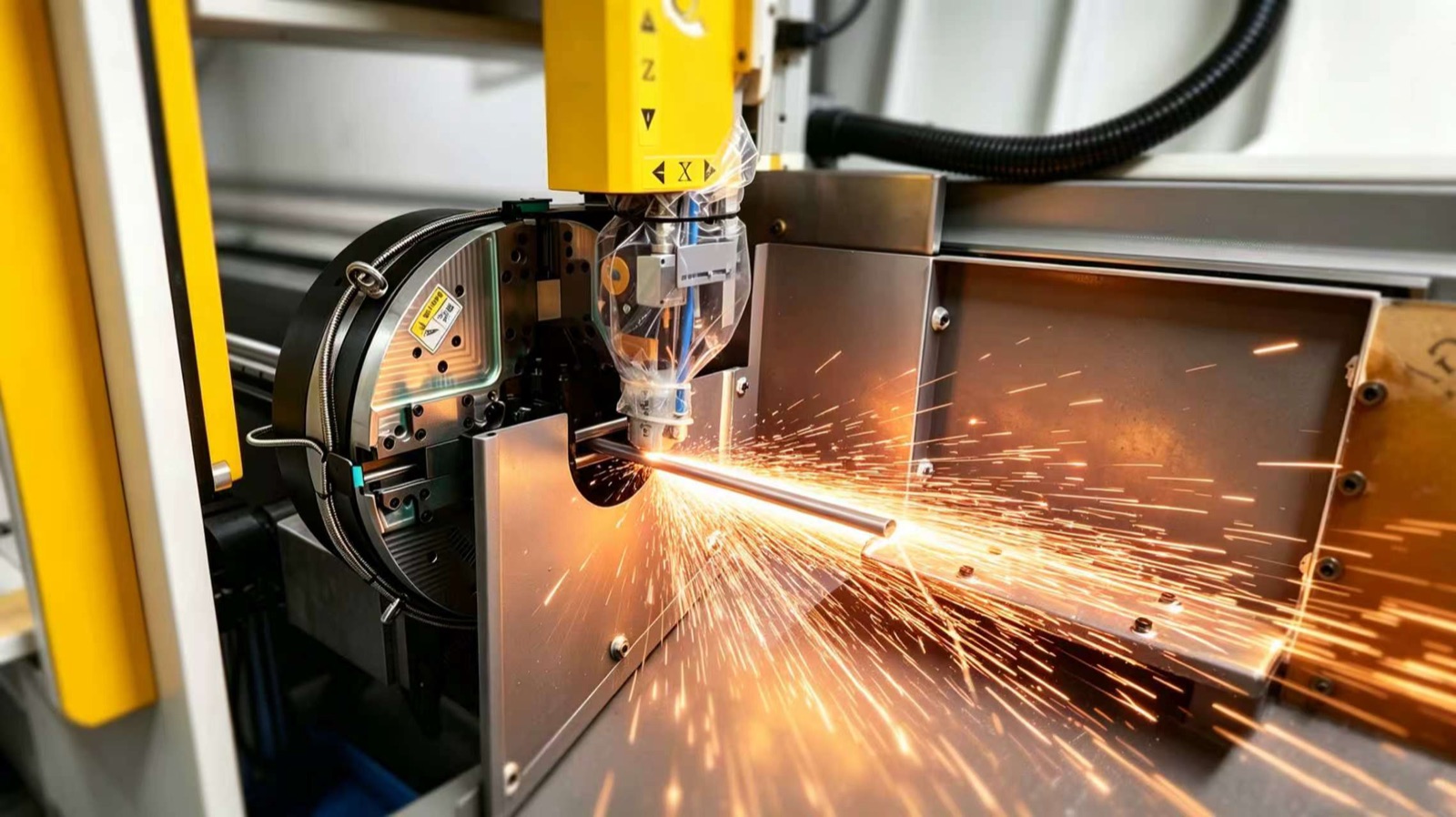
Fudakin runs laser tube cutting on the same Shenzhen floor as our stamping, casting, and finishing lines, cutting round and square tube to fit before assembly.
Ask by Emailor copy tiger@fudakint.comWhat Fudakin runs
Fudakin runs laser tube cutting on the same Shenzhen floor as our stamping, die casting, and finishing lines — steel, stainless, and aluminum tube and profile, cut with complex end geometry, holes, notches, and slots in one setup instead of a straight cut followed by a separate machining step. That includes the compound-angle cuts that let two tubes meet and seat cleanly before assembly.
Cut frames and components move straight into deburring or assembly, and from there into powder coating, painting, or plating on the same site — a tube-based frame doesn't leave the building between being cut and coming out as a finished, painted assembly.
Tube-cut frames often pair with stamped brackets or die-cast housings in the same product. Because cutting, stamping, casting, and finishing all run under one roof, the fit between those parts gets checked in-house — we can hold a cut tube frame next to a stamped bracket on the same floor before either one ships, instead of trusting two separate vendors' tolerances to agree.
Why cutting tube is a different problem than cutting sheet
Flat-sheet cutting is forgiving — the material lies still and the beam travels over it in a plane. Tube cutting adds a curved, moving workpiece, which changes what can go wrong.
Beam angle on a curved surface
As a round tube rotates under the cutting head, the beam has to stay focused and perpendicular to the surface through the whole cut — especially where the path wraps around the tube or where two tubes intersect. A machine or program not built for this leaves an inconsistent edge: clean on one side, rough or incompletely pierced on the other.
Joint geometry that has to fit before assembly
Much of tube cutting exists to prepare a joint — the compound-angle cut where one tube meets another, so the two parts seat together with a consistent gap before assembly. Get that cut wrong and the fit-up problem shows up at the assembly station, where it's far more expensive to fix.
Wall thickness and reflectivity
Wall thickness affects how fast the beam can cut without leaving dross or an incomplete pierce, and reflective materials like aluminum and stainless behave differently under the laser than mild steel. Getting cut parameters right for the specific material is what keeps edge quality consistent across a full run, not just the first part.
FAQ
Frequently asked questions
What is laser tube cutting used for?
It cuts round, square, and rectangular metal tube and profile stock directly — complex end geometry, angled cuts, holes, notches, and slots — in one setup, instead of cutting a straight length and then machining or punching features into it afterward. It's how tube-based frames and structural parts get made without a separate fixture for every feature.
Why is cutting a round tube harder than cutting flat sheet?
Flat sheet sits still under the laser head. A tube is round, so the cutting head and the material both have to move and rotate in coordination to keep the beam properly focused and perpendicular to a curved surface, especially where two tubes intersect at an angle. Getting that geometry wrong shows up as an uneven cut edge or a joint that doesn't seat cleanly.
Does laser-cut tube need finishing afterward?
Usually, yes. Cut edges may need deburring, and a tube frame headed for a finished product typically moves into assembly, then painting, powder coating, or plating. We handle that on the same floor the tube is cut on, so a frame doesn't ship out mid-process.
What materials can be laser tube cut?
Steel, stainless, and aluminum tube and profile are the common materials — each cuts differently depending on wall thickness and reflectivity, which affects cutting speed and edge quality. Tell us the material, tube diameter, and wall thickness and we'll confirm fit.
Is laser tube cutting only for large structural frames?
No — it fits anything built from tube or profile stock, from a small bracket-sized component to a full frame assembly. The value is precise, repeatable end geometry without a dedicated fixture per part, which makes it viable at a range of sizes and volumes.
Talk to us about a tube part
Send the drawing, tube size, wall thickness, and material — we'll tell you honestly what it takes to cut it clean.