Capabilities
Anodizing & Electroplating
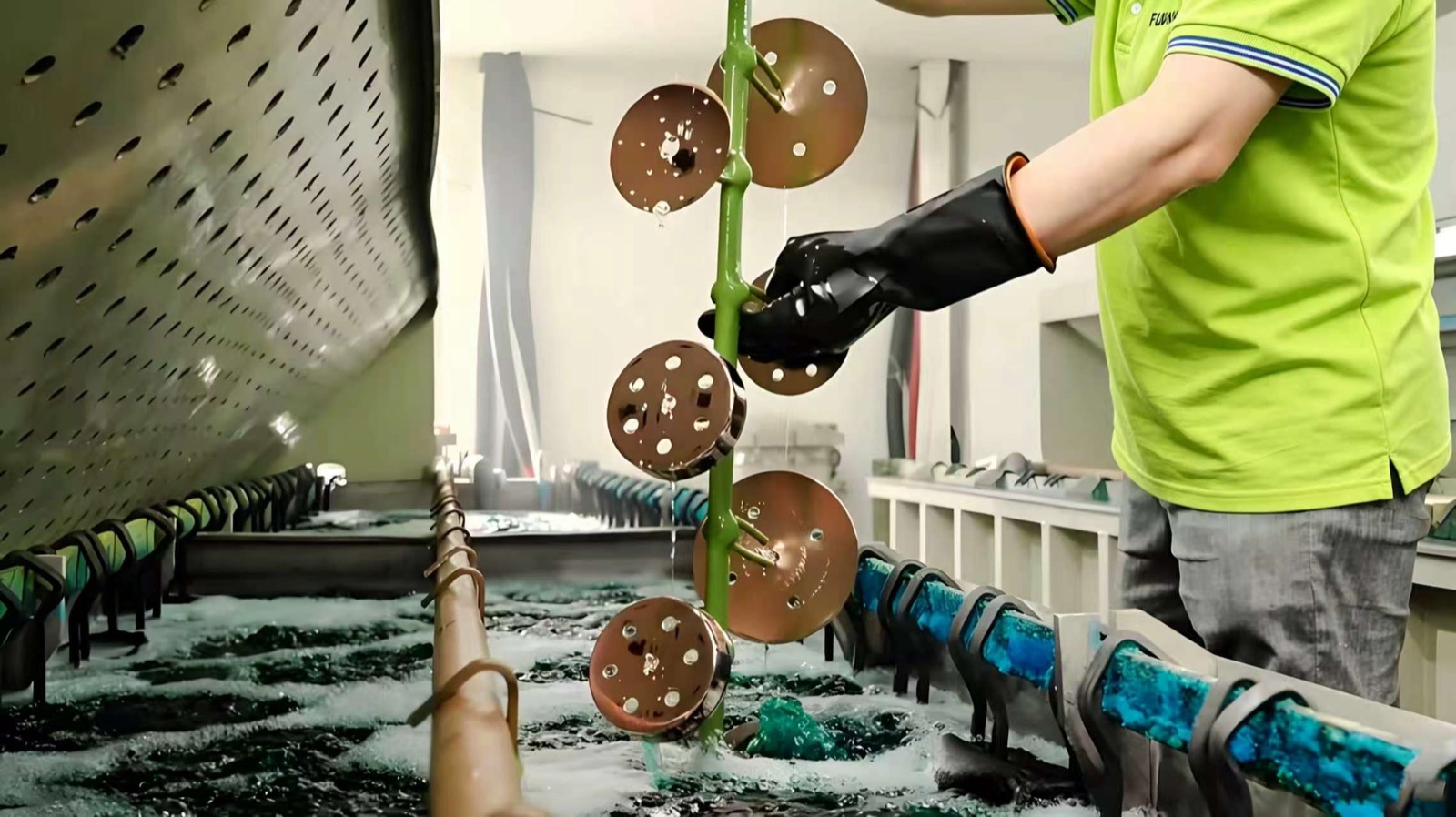
Fudakin runs anodizing and plating in Shenzhen, on the same floor as our machining, casting, and stamping lines, with surface prep checked before parts go into the tank.
Ask by Emailor copy tiger@fudakint.comWhat Fudakin runs
Fudakin runs anodizing and electroplating on the same Shenzhen floor as our CNC machining, die casting, and metal stamping lines. Parts move straight from machining or casting into the anodizing tanks or plating baths without leaving the building — no vendor handoff, no truck ride between processes.
Anodizing here works on aluminum, thickening and dyeing the metal's own oxide layer into a protective, colorable surface. Electroplating deposits a separate metal — nickel or chrome — onto machined, die-cast, or stamped parts, depending on what the base material and end use call for. We review surface preparation and process selection during DFM, against the part's actual base material, before it ever reaches a tank.
Because finishing sits next to the processes that make the part, the surface a part arrives with is the surface we control from the start — not something inherited from a supplier three trucks away. For parts that need a different kind of finish, we also run powder coating and multi-stage painting on the same floor, and can walk through which finish actually fits before you commit to one.
What to get right
Both finishes are supposed to last the life of the product — resisting corrosion and wear for years, not just looking right in the box. That durability depends on what happens before the part ever touches a tank.
Surface preparation decides the outcome
Any oxidation, contamination, or inconsistency on the base part carries straight through the process — anodizing or plating doesn't hide a poorly prepared surface, it locks it in. A finish that fails months after shipping is almost always a preparation problem, not a chemistry one. Aluminum's natural oxide layer also behaves differently than other metals, so the right process depends on the part's actual material, not on whatever a supplier already happens to run.
Consistency across a batch
A single good-looking sample proves little. What matters is whether tank chemistry, current, and time stay controlled closely enough that part five hundred matches part one — in color, thickness, and adhesion.
FAQ
Frequently asked questions
What's the difference between anodizing and electroplating?
Anodizing is an electrochemical process that thickens and hardens the natural oxide layer already on a metal — most commonly aluminum — turning part of the metal's own surface into a protective, often colorable finish. Electroplating deposits a layer of a different metal, like nickel or chrome, on top of the part's surface using an electric current. Anodizing works on the metal itself; plating adds a new metal layer over it.
Why anodize a part instead of just painting it?
Anodizing becomes part of the metal surface rather than sitting on top of it, so it doesn't chip or peel the way paint can, and it holds up well against corrosion and everyday wear. It's the common choice for aluminum parts that get handled a lot or need to keep a consistent look under regular use, where a painted finish would eventually show wear at edges and high-contact points.
What goes wrong with plating if it's rushed?
Poor surface preparation before plating is the most common failure — any contamination, oxidation, or inconsistent surface finish on the base part gets plated right over instead of cleaned off first, and the plating doesn't bond properly. That shows up later as peeling, blistering, or uneven coverage, not at the moment the part is plated.
Can anodizing add color to a part?
Yes — anodizing can be dyed to a range of colors as part of the process, which is part of why it's a common finish choice for aluminum parts that need both a protective surface and a specific appearance in one step.
Does anodizing or plating work on parts made from different processes?
Yes — machined, die-cast, and in some cases stamped metal parts can all be anodized or plated, provided the base material and surface finish are right for the process. We review that fit during DFM so a part is designed for the finish it needs, not finished as an afterthought.
Talk to us about a metal finish
Send the drawing and the base material — we'll tell you honestly whether anodizing, plating, or another finish fits.