Capabilities
Product Assembly
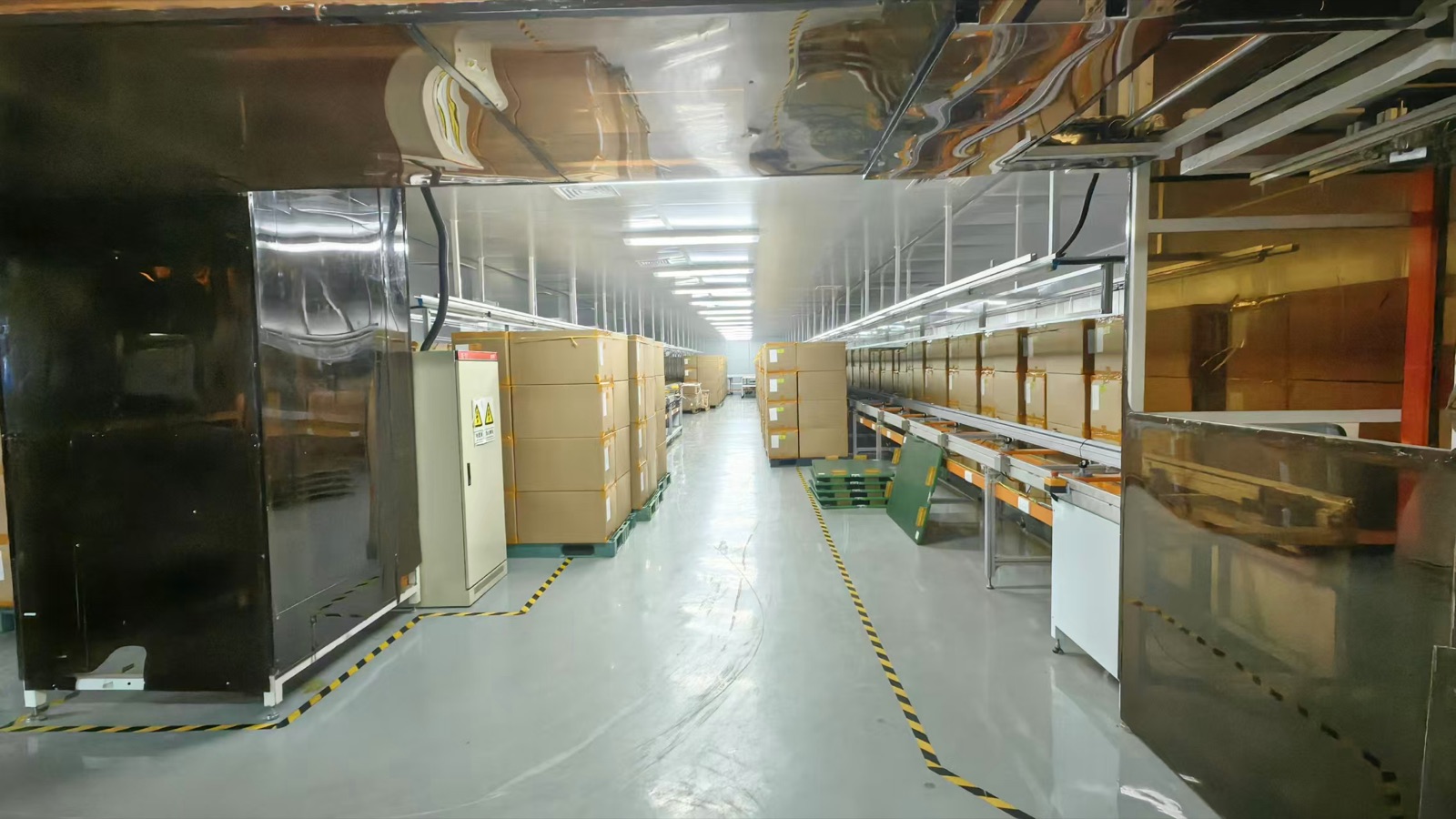
Fudakin runs sub-assembly and final assembly in Shenzhen and Bangkok, most often on components we molded, machined, and finished ourselves — fitted, fastened, and functioning together at production speed.
Ask by Emailor copy tiger@fudakint.comWhy assembly is where products actually fail
Individual parts get inspected, measured, and approved one at a time. Assembly is the first point where they all have to work together — and it's where problems that were invisible in isolation finally show up.
Tolerance stack-up
Every component carries some dimensional tolerance, and when several parts mate together, those tolerances add up. A gap, a misalignment, or a fastener that won't seat can trace back to a stack-up nobody caught because each part, alone, was within spec.
Fastening and joining at production speed
A fastening method that works cleanly on a hand-built prototype doesn't always hold up once it's repeated hundreds or thousands of times a day. Screw bosses that strip, snap-fits that fatigue, adhesives that need cure time the line doesn't have — these get engineered around before the line runs, in the same DFM review that shapes the parts themselves.
Build sequence and access
Every assembly has an order, and getting it wrong traps a step — a fastener that can't be reached once the next component is installed, a wire that has to route before a housing closes. We build and test the assembly sequence and fixturing before production starts, so the line doesn't discover the problem on unit one.
What Fudakin runs
Sub-assembly
Intermediate builds — a liner bonded into a shell, a strap mounted to a bracket, a mechanism fitted into a housing — checked for fit and function before they move to the next stage.
Final assembly
Every component and sub-assembly brought together into the finished, ship-ready product, on a line built and fixtured for the specific build sequence the product needs.
Electronics integration
Customer-supplied or customer-designed electronics mounted, wired, and integrated into the finished mechanical assembly, alongside the molded and machined components built on our own floor.
Every assembly program is planned before the parts are finished — build sequence, fixturing, and fastening method reviewed against the real components, not assumed and fixed later on the line.
FAQ
Frequently asked questions
What's the difference between sub-assembly and final assembly?
Sub-assembly builds an intermediate unit — a strap mounted to a bracket, a foam liner bonded into a shell — that still has more steps ahead of it. Final assembly brings every sub-assembly and component together into the finished, ship-ready product. A complex product might run through several sub-assembly stages before final assembly, each one a checkpoint where fit and function get verified before the build moves forward.
Why does assembly go wrong even when every individual part is good?
Parts that each pass inspection on their own can still fail to come together — tolerances that stack up across several mated components, a fastening method that works on a sample but not at production speed, or a build sequence that traps a step nobody can reach once the next part is on. Assembly is where a product's design gets tested as a whole, not part by part, which is why we build the assembly sequence and fixturing before the first production unit, not after.
Does Fudakin assemble products made entirely from parts it manufactures?
That's the case where assembly is strongest — when the molded, machined, finished, and sewn components all came off our own floor, tolerances and fit issues get caught and corrected inside one factory instead of surfacing for the first time when parts from different vendors meet on an assembly line for the first time.
Can Fudakin handle assembly for a product with electronics inside?
We integrate customer-supplied or customer-designed electronics into a finished mechanical assembly — mounting, wiring, and final build. We don't build the circuit boards themselves in-house; that's typically designed and produced separately and integrated on our line.
Where does Fudakin run product assembly?
Assembly runs in both our Shenzhen and Bangkok, Thailand facilities. Thailand's floor runs injection molding, warehousing, and assembly; the machined, finished, and sewn components that feed a Thailand assembly line typically come from Shenzhen.
Talk to us about assembly
Send us the BOM and the build steps — we'll tell you honestly what it takes to assemble it right, at your volume.