Capabilities
Sewing & Textiles — Cut & Sew
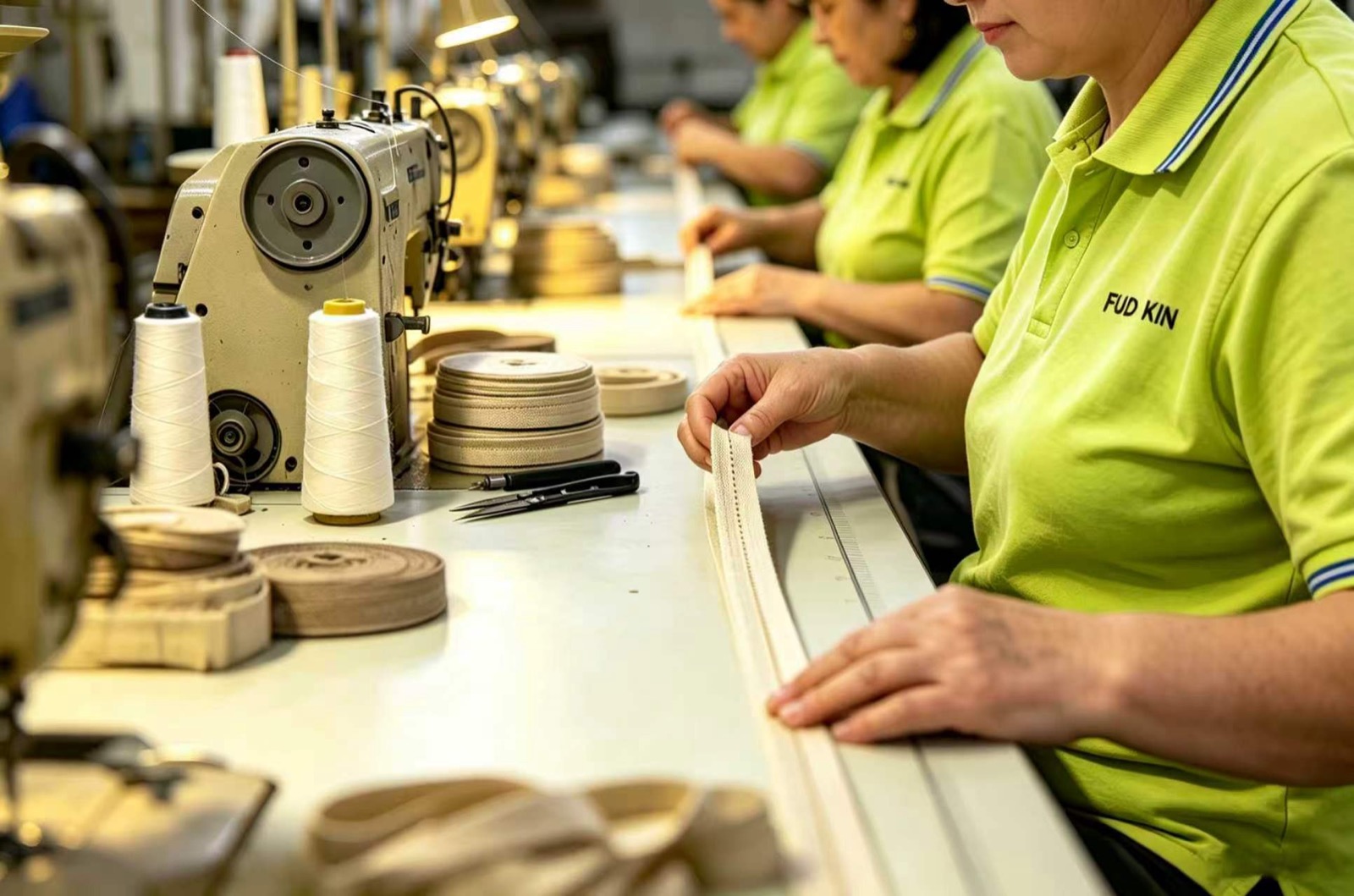
Fudakin sews straps, webbing, and harnesses in-house in Shenzhen, on the same floor as the hard parts they attach to.
Ask by Emailor copy tiger@fudakint.com1996
Manufacturing since
200,000
Square meters of floor
300+
People on the floor
30–45
Day production lead times
Harder Than It Looks
Durability
A strap or harness carries real load — body weight, repeated tension, force through an attachment point. Stitch pattern, reinforcement, and material have to be engineered for that load, not for how it looks folded on a shelf.
Source it from a second vendor and the brand manages two lead times and two quality standards before the parts ever meet — schedule risk built into having two suppliers instead of one.
What Fudakin Runs
What Fudakin runs
Cut and sew
Pattern cutting and stitching to a brand's materials and construction spec.
Harness & strap systems
Multi-point assemblies reinforced at every stress point.
Soft-goods assembly
Sewn to mate directly with the shell or housing it attaches to.
Built Together, Not Handed Off
Scheduling
Every sewn program starts with the load and attachment spec, reviewed alongside the hard component it pairs with — the strap and the shell designed as one product, not two parts hoping to fit.
FAQ
Frequently asked questions
What kinds of sewn components does Fudakin produce?
Straps, webbing, harnesses, and other soft goods — the textile components that pair with a molded or machined hard part to make a finished product. Think of the strap system on a helmet, a harness on a piece of protective gear, or a webbing component on a bag or carrier.
Why keep sewing in-house instead of sourcing it from a separate vendor?
Most hard-goods factories don't sew, so a product with both a molded shell and a strap or harness usually means two vendors, two schedules, and someone in the middle reconciling them. Because our sewing runs on the same floor as our molding and assembly, a strap and the housing it attaches to are built on one schedule and mated in-house, not shipped between two suppliers to be assembled by a third.
What makes a sewn strap or harness hard to get right?
Consistency under load. A strap or harness has to hold stitching under repeated tension and stress without seams slipping or webbing fraying at an attachment point — and that comes down to material selection, stitch construction, and where reinforcement goes at load-bearing points, decided before the pattern is cut, not fixed after a strap fails in testing.
Does a sewn component have to match the certification requirements of the finished product?
Where a product's certification depends on the strap or harness system — a helmet's retention system is a common example — we build to the specification and testing requirements the brand provides. We don't claim a certification on the finished product ourselves; that's the brand's process with the relevant testing body.
Does Fudakin sew and assemble in the same location?
Our sewing and textile work runs in our Shenzhen facility, where it sits alongside molding, finishing, and assembly, so a sewn component moves straight into final assembly without leaving the building.
Talk to us about a soft-goods part
Send the drawing and the load requirement — we'll tell you honestly what it takes to build it right, in-house.